At this site, we strive to bring you the most comprehensive and up-to-date information on a wide range of topics. If you have a particular topic, you'd like us to cover or if you have any questions about the information on our site, please don't hesitate to reach out to us. We're here to help and are always happy to hear from our readers.
22 September 2025
Links
12 May 2025
Bot Replies, Real Stress: Airtel’s Customer Support Nightmare
Let’s face it—most of us have been there. One moment you’re topping up your phone with what you think is the right plan, and before you know it, you’ve flushed ₹489 down the digital drain thanks to a misstep. Now imagine trying to fix that mistake only to be met with walls of automated responses, bot-powered dead ends, and a haunting silence from the very company you pay every month. This isn’t just a bad day—it’s a symptom of a much bigger disease in the Indian telecom industry. Companies like Airtel, which rake in billions, seem to have one major blind spot: human customer service.
Here’s a real-life blow-by-blow of how a simple recharge mistake spiraled into a masterclass on how to frustrate loyal customers, featuring our villains—chatbots, scripted replies, and, of course, the infamous “Appellate Authority Email Blackhole.”
When Automation Replaces Accountability
In a world increasingly run by AI, automation isn’t a bad word—unless you’re trying to fix a billing mistake. And this is where companies like Airtel miss the mark entirely. Instead of streamlining help, their bots end up becoming virtual gatekeepers that prevent real problem-solving.
- Chatbots That Answer Nothing: Airtel’s “Thanks” app might sound friendly, but its chatbot is anything but helpful. It runs on pre-fed logic, looping users through a maze of irrelevant suggestions. If your issue is even slightly unique—like an overlapping recharge—it simply doesn’t compute. You’re left yelling at a screen while your money silently disappears.
- No Real-Time Human Intervention: What’s worse? There’s no human in sight when it matters. Forget immediate redressal—you can’t even escalate efficiently. The app makes sure you exhaust all its “smart” options before letting you raise a complaint. And even then, guess what you get? An automated complaint ID and radio silence.
- Automated Email Responses: Digital Gaslighting: Thinking of emailing higher authorities? Good luck. The official Airtel grievance emails ([email protected], [email protected]) bounce back with—you guessed it—another automated reply urging you to “raise the concern through the Thanks app.” It’s like shouting into a void and getting an echo that mocks you.
- Why Companies Love This Setup: There’s a sinister upside to this for telecom giants. Bot support reduces human resource costs and delays refunds. By tiring the customer out with endless loops, many issues simply fade away—unresolved, unacknowledged, and unrefunded. It’s cost-effective apathy, wrapped in the guise of “digital convenience.”
The High Cost of Silence
Ever tried to call Airtel’s customer care? Oh, you thought it was free? Think again. Speaking to a human to report a service failure costs ₹0.50 per minute. Imagine that—you’re paying to complain about a service you already paid for!
- You’re Paying to Complain: After failing to fix the issue online, the next step was to dial customer care. But wait—Airtel charges ₹0.50/minute to connect you with an actual person. And when you finally get through, you’re told the issue will be resolved in 10 days. Spoiler: It won’t.
- “10-Day Resolution” — Telecom’s Favourite Lie: Ten days went by like a breeze—with zero updates, zero resolution. Not even a courtesy check-in. It’s a classic delay tactic. It buys them time, makes you forget, or worse, makes you give up. It’s like a magician’s trick—now you see hope, now you don’t.
- Social Media Support: Just Another Scripted Wall: So, like any modern-day warrior, you take your grievance public—on Twitter or Facebook. And what do you get? A templated response:“Please be informed that the recharge was done more than 3 days ago… hence, we are unable to reverse the amount.” That’s it. No back and forth. No human logic. Just another bot-trained rep echoing policy like a parrot.
- Mental Exhaustion and Loss of Trust: The emotional toll is real. You’re not just losing money—you’re burning hours, energy, and sanity. Airtel, and others like it, have essentially made customer support a test of endurance. And it’s breaking trust one unresolved ticket at a time.
Why This Has to Change
Enough is enough. Telecom companies can’t keep hiding behind bots and scripted replies. When customers make honest mistakes, companies must respond with empathy—not empty policies. Let’s peel back the legal and ethical curtain on this whole charade.
- Your Rights as a Consumer: According to TRAI (Telecom Regulatory Authority of India), customers have the right to raise service-related grievances through digital and physical formats. But how often do these policies trickle down into actual practice? That’s where the gap lies. Companies leverage ignorance to their advantage.
- TRAI’s Grievance Redressal Framework: A Toothless Tiger? - On paper, telecom companies must respond within 3 days and resolve issues within 10. But without enforcement, these timelines are as hollow as a chatbot’s promise. We need regulatory teeth that actually bite when customer rights are violated.
- Policy Reform: Mandating Human Touchpoints - It’s time for policy intervention that forces telecoms to maintain human escalation paths. Bots can be the first line, not the last. Refund policies must include scope for human discretion, especially for overlapping or accidental recharges.
- What You Can Do as a Consumer: Start with social proof. Share your story publicly. Log complaints not just with the company, but with TRAI, the Consumer Forum, and Jago Grahak Jago portals. The more noise we make, the more pressure mounts for systemic change.
Final thoughts
This isn’t just a story about a bot or a botched recharge—it’s a mirror reflecting a growing trend of digital indifference. Airtel may be the face here, but the disease runs deeper across the entire telecom sector. By replacing empathy with automation, and human support with FAQs, they’ve alienated the very people who keep their towers running—us.
So the next time your recharge goes wrong and your issue is swallowed by bot responses, remember: you’re not alone. And silence isn’t golden—it’s just a cheaper customer service strategy. We deserve better. We deserve to be heard. Not by machines, but by the people who are paid to care.
13 December 2024
Why Apple Needs an TV Stick: Elegant streaming for every screen
Imagine this: you've splurged on a high-end OLED TV, expecting top-notch visuals and seamless performance. But instead, you're stuck battling outdated, laggy, and unresponsive TV operating systems like Tizen or Android TV. Sound familiar?
Now, think of how Apple—a brand synonymous with innovation and user experience—could revolutionize your TV viewing experience. While the Apple TV box is impressive, it's bulky, costly, and feels out of step in a market leaning toward simpler streaming solutions like the Amazon Fire Stick or Roku.
Enter the idea of the Apple TV Stick: a sleek, affordable, and efficient device that complements Apple TV+, integrates seamlessly with the Apple ecosystem, and transforms outdated TVs into cutting-edge entertainment hubs. Let’s dive into why Apple should rethink its approach to the streaming device market.
Current Challenges with Smart TVs
Smart TVs promise a world of convenience but often fall short. For users of high-end TVs like Sony and Samsung, the frustration is all too real.
- Outdated Operating Systems: Many TVs, even premium ones, rely on OS platforms like Tizen or Android TV that quickly become outdated. This leads to sluggish performance, unresponsive interfaces, and a less-than-ideal user experience.
- Lack of Regular Updates: Unlike smartphones or laptops, TV OS updates are sporadic and often fail to keep up with the latest apps and features, leaving users in the lurch.
- Limited Ecosystem Integration: Most smart TVs don’t integrate well with broader ecosystems, like Apple’s, making it difficult for users to sync devices, apps, or data seamlessly.
- Inconsistent App Experiences:Streaming apps like Netflix, Disney+, and even Apple TV+ often perform inconsistently on these systems, with buffering issues and crashes disrupting the immersive experience.
An Apple TV Stick could address these pain points while opening up new opportunities for Apple in the streaming market.
- Affordable Entry Point: At a fraction of the cost of the Apple TV box, a stick would attract a broader audience, including budget-conscious consumers who crave premium experiences without breaking the bank.
- Simplicity and Portability: Compact and plug-and-play, a TV stick eliminates the need for cables and complex setups. It’s perfect for modern homes and frequent travelers.
- Enhanced Apple TV+ Experience: With Apple pushing its streaming platform, a stick would provide a seamless way for users to explore Apple TV+ content in full glory, even on non-Apple hardware.
- Ecosystem Integration: An Apple TV Stick would effortlessly connect with iPhones, iPads, and HomePods, offering features like AirPlay, Siri voice control, and personalized recommendations.
An Apple TV Stick isn’t just about streaming—it’s about transforming how we interact with our TVs.
- Revamping Old TVs: With an Apple TV Stick, even older TVs could run on Apple’s intuitive tvOS, breathing new life into devices that might otherwise be obsolete.
- Improved Performance: Equipped with Apple’s signature processors and design, the stick would offer faster, smoother navigation compared to current TV OS options.
- Advanced Features: From Dolby Vision and Atmos support to multi-user profiles and universal search, the stick could replicate the Apple TV box’s premium features in a more accessible form factor.
- Cross-Device Sync: Imagine starting a show on your iPhone, pausing it on your MacBook, and finishing it on your TV—all without missing a beat. An Apple TV Stick could make this seamless.
Comparison Table: Apple TV Box vs. Potential TV Stick
|
Feature |
Apple TV Box |
Apple TV Stick |
|
Price |
High (₹12,000+) |
Affordable (~₹3,000-₹5,000) |
|
Portability |
Limited |
Compact and travel-ready |
|
Setup Complexity |
Moderate |
Plug-and-play simplicity |
|
Target Audience |
Niche (premium users) |
Mass market |
Why Apple Needs to Act Now
The streaming device market is booming, and competitors like Amazon and Google have already captured significant ground with their affordable solutions. Here’s why Apple should prioritize an Apple TV Stick:
- Broader Market Reach: An affordable TV stick could entice non-Apple users, introducing them to the ecosystem and potentially converting them into loyal customers.
- Boosting Apple TV+ Subscribers: With an easily accessible device, more users would explore Apple TV+, increasing subscriber counts and competing effectively with Netflix and Amazon Prime.
- Staying Competitive: In a world where simplicity often trumps complexity, a TV stick would position Apple as both innovative and user-friendly.
- Strengthening Brand Loyalty: Offering a practical, everyday solution would reinforce Apple’s reputation for delivering exceptional user experiences across all product categories.
My final thoughts: A Game-Changer in Waiting
The Apple TV Stick isn’t just a product—it’s a golden opportunity for Apple to disrupt the streaming device market. By blending the elegance of the Apple ecosystem with the convenience of a compact, affordable device, Apple could transform millions of TVs into hubs of entertainment and innovation.
For users tired of laggy, outdated TV operating systems, an Apple TV Stick would be nothing short of a revelation. It's time for Apple to think small—because sometimes, the biggest innovations come in the tiniest packages.
17 October 2024
Unmatched Build Quality: Why Ford EcoSport Still Reigns Supreme in India
Ford EcoSport’s Superior Build Quality
The Ford EcoSport has become synonymous with rugged build quality in the Indian market. For car buyers who prioritize longevity and safety, it’s clear why the EcoSport continues to stand out.
- High-Grade Materials and Robust Design: Ford didn’t cut any corners when it came to the materials used in the EcoSport. The car’s steel frame and well-engineered components give it a sturdiness that’s hard to find in the same price bracket. While other brands may focus on aesthetics, Ford paid attention to durability, making the EcoSport a car that ages well with minimal wear and tear.
- Crash-Test Superiority: Safety is a huge concern for Indian buyers, especially on unpredictable roads. EcoSport’s impressive crash-test ratings showcase its resilience. It offers a solid protective shell for passengers, making it an ideal choice for families concerned about safety in a car accident.
- Longevity That Builds Trust: One of the reasons EcoSport owners swear by the brand is its long-term reliability. These cars are known for going the distance without constant mechanical issues. The parts hold up well over time, and even after years of usage, an EcoSport doesn’t feel outdated or fragile.
- Outperforming Competitors in the Same Segment: Compared to rivals like the Hyundai Venue or Tata Nexon, Ford EcoSport holds its ground well. While many competitors may offer modern technology or flashy designs, few can compete with Ford’s focus on substance and safety.
An Unmatched Ride Experience in Its Class
When it comes to the driving experience, Ford EcoSport simply excels. Designed to handle the unique challenges of Indian roads, the car delivers a smooth, controlled ride every time.
- Handling Indian Roads Like a Pro: Whether it’s navigating through potholes, dealing with narrow city streets, or heading out on a road trip, the EcoSport manages it all with finesse. Its suspension system absorbs road imperfections easily, making bumpy rides feel smoother compared to many cars in its class.
- A Well-Tuned Suspension for Comfort: The suspension system in the Ford EcoSport deserves special mention. It’s finely tuned to handle both city and highway conditions, offering the perfect balance between comfort and control. This feature alone has earned it a dedicated fanbase, as drivers don’t have to sacrifice ride quality for affordability.
- Better Than Competitors in Driving Dynamics: While rivals like the Maruti Suzuki Brezza or the Kia Sonet boast similar price tags, they lack the level of driver confidence and smooth handling that comes with the EcoSport. Ford's engineers have perfected the steering feel, giving drivers a greater sense of control on winding roads or during high-speed driving.
- Loyalty Built on Driving Pleasure: EcoSport owners often cite the driving experience as a key reason they stick with the brand. There’s something about the way this car responds to driver input that makes it more enjoyable, whether it’s for daily commutes or weekend getaways.
The Affordable Price Dilemma for EcoSport Owners
For many Ford EcoSport owners, finding a replacement car has been an uphill battle. Despite numerous offerings from other manufacturers, none seem to match the EcoSport’s combination of quality and affordability.
- Limited Affordable Options with Comparable Quality: With Ford's exit from the Indian market, many EcoSport owners are facing a dilemma. While brands like Tata, Maruti Suzuki, and Hyundai offer budget-friendly alternatives, few can offer the same build quality. EcoSport’s structural integrity and attention to detail are rare in the affordable segment.
- Rising Costs of Rival Brands: While it’s true that other manufacturers are offering newer models, they often come at a much higher price. This price hike doesn’t always guarantee better build quality, leaving EcoSport owners questioning whether it’s worth spending more for less.
- Struggling to Find a Worthy Successor: Many EcoSport owners are holding onto their cars for longer than expected because they simply can’t find a worthy successor. Models like the Kia Sonet or Hyundai Creta may offer sleek designs, but they often fall short on the durability and ride comfort that Ford mastered.
- Sticking With What Works: Until a car with a similar price-to-quality ratio comes along, EcoSport owners are sticking with what works. The long-term reliability and comfort make it difficult to part ways, even with Ford no longer producing the EcoSport in India.
My Final thoughts
The Ford EcoSport may no longer be in production in India, but its legacy continues to resonate with car enthusiasts and owners alike. With unmatched build quality and a superior driving experience, it’s no wonder existing EcoSport owners find it hard to switch to another car. As the market shifts and new models emerge, one thing remains certain: the Ford EcoSport set the bar high, and it will take something truly exceptional to dethrone it as the go-to choice for affordable durability in the Indian automobile market.
Table: Key Comparisons Between Ford EcoSport and Competitors
|
Feature |
Ford EcoSport |
Hyundai Venue |
Kia Sonet |
Tata Nexon |
|
Build Quality |
Superior, Long-lasting |
Good but less durable |
Decent but lacks ruggedness |
Fair but needs frequent maintenance |
|
Suspension Comfort |
Excellent |
Average |
Average |
Above average |
|
Safety Ratings |
High |
Moderate |
Moderate |
Moderate |
|
Price Range (INR) |
Affordable (10-13L) |
8-12L |
9-13L |
7.5-12L |
The Ford EcoSport has truly made a lasting mark on the Indian market, and for those who value quality and reliability, it will always hold a special place.
28 June 2024
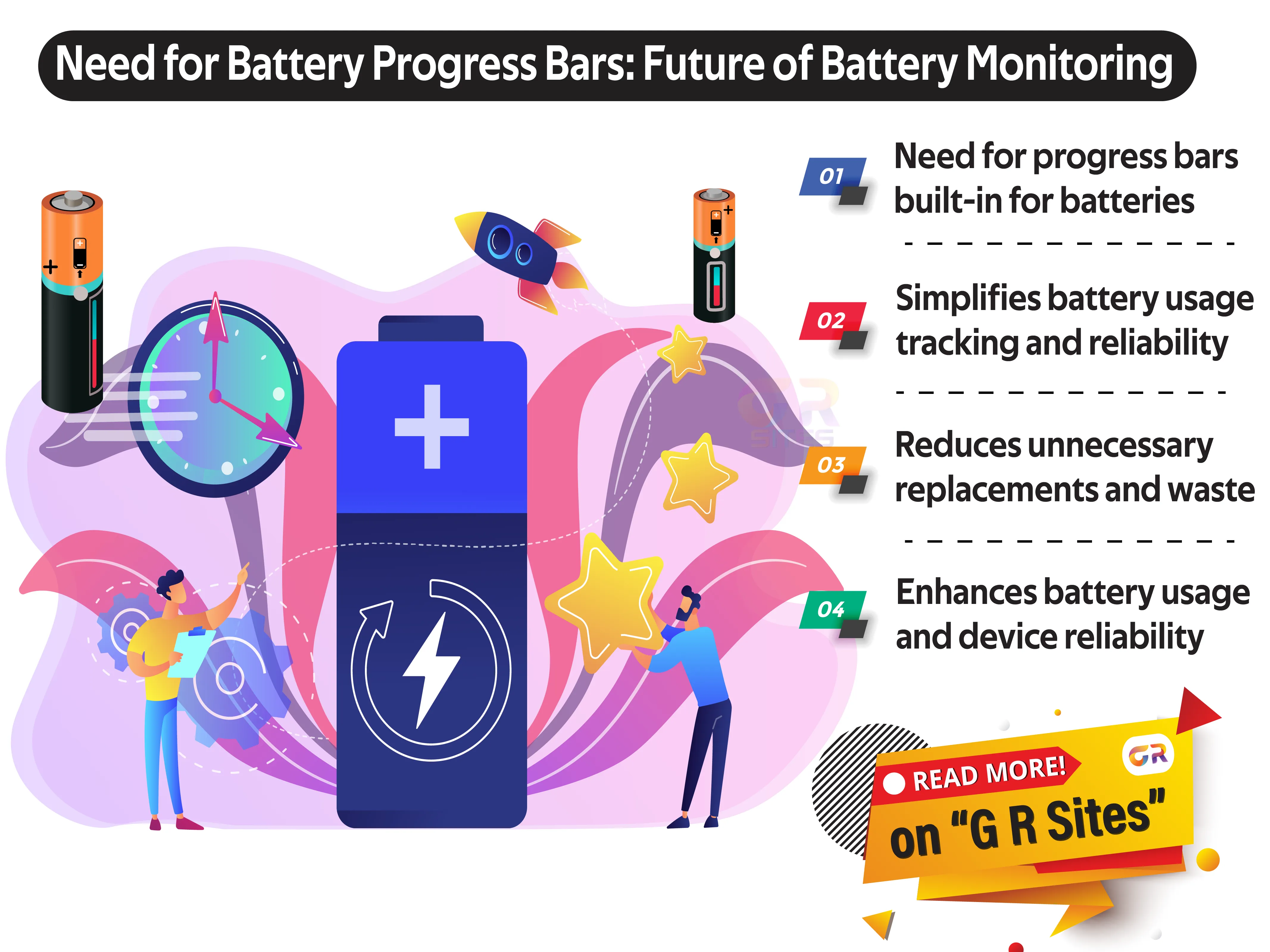
Need for Battery Progress Bars: Optimized usage of batteries
- No Simple Diagnosis: Without sophisticated tools, there's no easy way to tell how much power is left in a battery.
- Unexpected Failures: Devices suddenly stopping can be incredibly inconvenient, often at the worst possible moment.
- Consumer Frustration: The uncertainty of battery life leads to unnecessary replacements and frustration.
- Environmental Impact: Frequently replacing batteries before they’re fully drained contributes to environmental waste.
- Visual Indicator: A clear, easy-to-read display on the battery itself would allow users to see at a glance how much power is left.
- Better Resource Management: Knowing exactly when a battery is running low means fewer unnecessary replacements and less waste.
- Convenience: No more guesswork or mid-task failures; users can replace batteries at the optimal time.
- Enhanced Device Performance: Devices can operate more reliably when powered by batteries with known capacity levels.
- User Experience: Consumers would enjoy a significantly improved experience, reducing frustration and enhancing the functionality of their devices.
- Environmental Benefits: Reducing battery waste is a critical step towards more sustainable consumption. Knowing when to replace batteries can prevent premature disposal and reduce environmental harm.
- Market Transformation: As more manufacturers adopt this technology, it could become a standard feature, driving innovation and setting new industry benchmarks.
22 April 2024
Mobile Revolution: Transforming Phones into Mini Laptops
- Moto Ready Innovation: Motorola's Moto Ready feature represents a significant leap forward in mobile functionality, allowing users to seamlessly connect their phones to external displays and utilize them as mini laptops.
- Minimizing Dependency: By leveraging Moto Ready, users can reduce their reliance on traditional desktop or laptop devices, streamlining their professional workflow and enhancing mobility.
- Travel-Friendly Option: The portability and convenience of using smartphones as mini laptops make them ideal companions for travelers, eliminating the need to carry bulky equipment.
- Enhanced Productivity: With the ability to connect to external displays, smartphones equipped with Moto Ready offer a versatile computing experience, empowering users to work efficiently from anywhere.
- Leap in Performance: The latest Snapdragon chip processors have ushered in a new era of performance and efficiency, enabling smartphones to rival traditional computers in power and capability.
- Universal Compatibility: By enabling options for users to connect their Android devices to external displays or TVs, manufacturers can democratize the Moto Ready experience, making it accessible to a broader audience.
- Premium Pixel Integration: Google Pixel phones, known for their premium design and cutting-edge features, are prime candidates for integrating similar Moto Ready functionality with ChomeOS, offering users a seamless and intuitive computing experience.
- ChromeOS Integration: With the emergence of ChromeOS, a lightweight version of the Google operating system for entry laptops optimized for mobile devices, smartphones can function as mini laptops, providing users with a familiar and versatile computing environment.
- Enhanced Versatility: Smartphones equipped with ChromeOS desktop functionality become powerful productivity tools, capable of seamlessly transitioning between mobile and desktop environments.
- Streamlined Workflows: Users can enjoy a consistent computing experience across devices, with the ability to access their files, applications, and data from anywhere.
- Cost-Efficient Solution: By leveraging existing smartphone hardware, users can avoid the expense of purchasing additional desktop or laptop devices, saving both money and resources.
- Empowering Innovation: The integration of ChromeOS with Android OS and Google Pixel phones fosters innovation and creativity, inspiring developers to create new applications and experiences tailored to the mobile computing paradigm.
27 March 2024
Decoding Return to Office Mandate: Puzzle of IT Companies' Decisions
- Cost Savings: Enabling remote work allows IT companies to significantly reduce overhead costs associated with maintaining physical office spaces, including infrastructure, building maintenance, and utilities such as electricity and water.
- Employee Conveyance Costs: By facilitating remote work arrangements, companies can alleviate the financial burden on employees stemming from commuting expenses, such as fuel costs, public transportation fares, and vehicle maintenance.
- Enhanced Productivity: Contrary to initial concerns, many IT companies have observed sustained or even improved productivity levels among remote workers during the pandemic, thanks to advancements in digital collaboration tools and communication platforms.
- Employee Satisfaction: Offering the flexibility to work remotely can boost employee morale and job satisfaction, contributing to higher retention rates and a more positive work culture.
- Flexibility in Office Attendance: Rather than imposing a rigid return to office policy, IT companies could offer employees the flexibility to choose their preferred timing for visiting the office, allowing for a gradual transition back to in-person work.
- Quarterly Team Meetings: To foster in-person connections and collaboration, IT companies could organize quarterly team meetings or events that bring employees together for face-to-face interactions while maintaining remote work as the default.
- Preferred Office Location: Providing employees with the option to select their preferred office location, whether based on proximity to their residence or personal preferences, can enhance satisfaction and morale while accommodating diverse needs.
- Flexibility: A hybrid work model allows employees to enjoy the best of both worlds, offering the flexibility to work remotely while providing opportunities for in-person collaboration and engagement as needed.
- Customization: Companies can tailor their hybrid work arrangements to accommodate individual preferences and job requirements, empowering employees to choose the work setup that best suits their needs.
- Adaptability: Embracing a hybrid work model demonstrates agility and adaptability on the part of IT companies, enabling them to respond effectively to changing market dynamics and employee expectations in the post-pandemic era.
7 June 2023
2012 MacBook Pro: The Journey and Untimely Demise
The Water Incident - A Brush with Disaster
- A Sticky Situation: Picture this - it was a typical day, just like any other, until my daughter decided to make a surprise visit to my home office. Innocently enough, she placed a glass of water on the desk, within arm's reach of my beloved MacBook Pro. You can probably guess what happened next. One misjudged movement, and disaster struck. The glass tipped over, spilling its contents perilously close to my laptop. Panic set in as I rushed to save my faithful machine from an untimely demise.
- The Aftermath: I managed somehow to prevent the water from directly splashing onto the MacBook Pro's keyboard. However, a small but significant amount had managed to seep through the ventilation slots, causing concern. However, it wasn't long before the consequences of the water incident started to rear their ugly head.
- The First Motherboard Replacement: As days turned into weeks, I noticed peculiar behavior from my once trusty companion. Random crashes, sluggish performance, and intermittent screen flickering became a part of my daily routine. It became clear that the water had caused damage that could not be ignored. Reluctantly, I took my MacBook Pro to third party service center, where they diagnosed the issue: a faulty motherboard.
- The Costly Decision: After weighing the pros and cons in early 2016, I decided to go ahead with the repair. After all, the MacBook Pro had served me well, and I believed it had more life left in it. The repair was completed, and my trust in my resilient machine was reaffirmed.
- The Final Blow: RAM Slot Issues: Fast forward to mid-May 2023. Once again, RAM slot issues reared their ugly head, rendering my beloved machine unresponsive and unwilling to start. This time, however, the prognosis was grim. The only solution was a complete motherboard replacement, a costly affair that left me at a crossroads.
- Weighing the Options: The prospect of investing in yet another motherboard replacement was daunting. While my 2012 MacBook Pro had served me well over the years, I had to consider the inevitable march of technology. The advancements made since its release had resulted in sleeker, faster, and more capable machines.
- Embracing the Future: The Purchase of a New MacBook Pro - After much contemplation, I made the difficult decision to bid farewell to my 2012 MacBook Pro and embrace the future. I knew that in order to keep up with the ever-evolving demands of modern computing, a new MacBook Pro was the logical choice. This time, I aimed to future-proof my purchase, ensuring that it would last me for the next six to seven years. It was an investment in productivity, creativity, and the seamless integration of technology into my life.
From surviving a water incident to enduring a motherboard replacement, it had proven its resilience time and time again. However, all good things must come to an end, and the laptop's RAM slot issues ultimately sealed its fate. It was a difficult decision, but I chose to embrace the future by purchasing a new MacBook Pro, one that would carry me through the next chapter of my digital adventures. Farewell, old friend, and welcome, new companion.